Most cloud platforms are swimming in data. Volumes, frequencies, throughput, processing types, error rates, latency curves. All the raw ingredients are there. Yet in many organisations, the ability to ask questions of that data remains locked behind SQL skills, rigid dashboards, or overstretched technical teams.
This is the gap ChatDB was designed to close.
ChatDB is an internal AI‑powered interface that allows non‑coders to query the SwiftCore Report Engine using natural language. Instead of writing SQL or navigating pre‑defined analytics views, users simply ask questions in plain English and receive both a clear answer and the exact query used to produce it.
For example:
How many records did PAF process between 1st April and 27th April?
ChatDB interpreted the intent, handled the date range boundaries correctly, generated the appropriate query, and returned:
- Answer
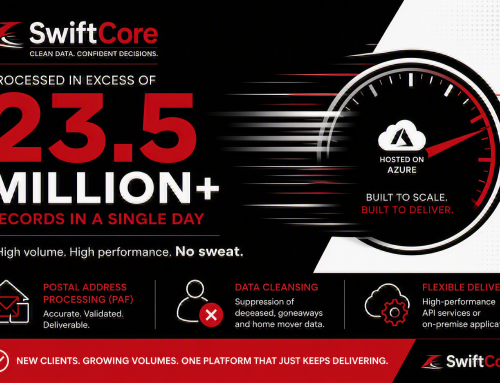
PAF processed 27,846,598 records between 1 April 2024 and 27 April 2024.
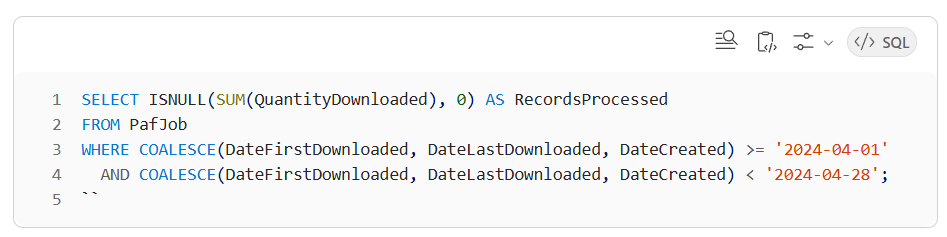
The query includes all records from 2024‑04‑01 up to, but not including, 2024‑04‑28, ensuring that 27 April is fully included.
- Logic applied
Records were counted where any of the following timestamps fell within the date range:- DateFirstDownloaded
- DateLastDownloaded
- DateCreated
- SQL used
- Results
A single, auditable value returned directly from the reporting layer.
No dashboards. No manual date logic. No ambiguity around inclusive or exclusive ranges.
Just a question and a clear answer.
And while ChatDB currently serves a reporting and operational analytics function, the more interesting question is this:
Are there other applications for cloud hosted services that could benefit from a similar sprinkling of AI‑driven database query tools?
The short answer is yes. Many.
The problem with dashboards (and why they persist)
Dashboards are not inherently bad. They provide consistency and at‑a‑glance visibility. The issue is that they only answer questions someone anticipated in advance.
Real operational questions often look more like this:
- “How much processing actually occurred during this specific incident window?”
- “What volume passed through the system after a cut‑off but before reconciliation?”
- “Which date fields are really being used for reporting versus billing?”
These are deceptively simple questions, and yet they often require careful handling of edge cases, fallback logic, and date semantics. This is exactly the kind of work non‑technical users should not have to do themselves.
AI‑assisted querying flips this model around.
Where AI query tools add unique value
AI database query tools like ChatDB are not intended to replace BI platforms. They complement them, particularly where:
- Data already exists and is well structured
- Reporting views or APIs are available
- Access is constrained by technical skill, not by permission
- Questions change faster than dashboards can be rebuilt
That combination is far more common in cloud services than most teams realise.
- Cloud operations and SRE teams
Operational data is detailed but fragmented. Processing timestamps, retries, downloads, throughput metrics.
An AI query layer allows operators to ask:
- “How much data was processed during the maintenance window?”
- “Which days breached volume expectations after a release?”
- “Are we attributing activity to the correct event timestamp?”
Instead of manually reasoning through which columns matter, ChatDB encodes that knowledge once and applies it consistently.
- Managed platforms and SaaS providers
Many SaaS platforms expose usage data to customers via static dashboards or CSV exports. This works until customers ask nuanced questions.
Embedding an AI‑driven query interface allows customers to safely explore their own data:
- Precise time windows
- Volume attribution logic
- Clear definitions of what is being counted
Crucially, showing the generated SQL builds trust. Customers can see exactly how a number was produced.
- Compliance, audit, and risk teams
Audit questions are often time bound:
- “How many records fell within this regulatory reporting window?”
- “What activity occurred between two specific dates, regardless of processing stage?”
These teams care deeply about correctness but rarely want to write SQL. AI‑assisted querying bridges that gap, provided access remains read only and fully auditable.
- Product management and service design
Product managers tend to ask temporal questions:
- “What changed after pricing went live?”
- “What was usage like before and after feature enablement?”
The ability to naturally express a date bounded question and have the system handle inclusive ranges and data semantics correctly, shortens feedback loops significantly.
- Reducing “shadow SQL” and data drift
When self‑service querying is unavailable, unofficial queries spread quietly across teams. Logic gets copied, tweaked, misunderstood, and eventually diverges.
ChatDB centralises interpretation while decentralising access. Everyone can ask questions, but the system remains the single source of truth for how those questions are answered.
From reporting feature to thinking partner
ChatDB began as a way for non‑coders to query SwiftCore processing data. What it really demonstrates is a broader shift in how cloud services can expose their data.
When users can ask precise, context aware questions, and see how the answer was derived, data stops being something you extract and becomes something you converse with.
And sometimes, all it takes to unlock that shift is a small, well placed sprinkling of AI.