The History of Royal Mail’s Postcode Address File (PAF): A Timeline of Addressing Evolution

By |2026-06-10T09:27:23+00:00June 10th, 2026|

The Royal Mail’s Postcode Address File (PAF) is one of the most important yet often overlooked datasets in the UK. It underpins everything from mail delivery to e-commerce checkouts, credit checks, and emergency response systems. But PAF didn’t appear overnight. It evolved over decades alongside changes in addressing, technology, and society. This post explores the history and evolution of PAF, from the early days of postal districts to the digital infrastructure we rely on today. Before PAF: The Foundations of Modern Addressing (Pre-1970) 1850s–1910s: Postal districts and sorting efficiency Major cities such as London began using postal districts (e.g. “EC” or “SW”) in the mid-19th century. These were introduced to improve sorting efficiency as urban populations grew rapidly. However, outside [...]

Why Returned Mail Can No Longer Be Ignored: An Industry Wide Call to Action

By |2026-04-13T08:55:14+00:00April 13th, 2026|

Returned Mail has long been an inconvenient truth in the UK postal ecosystem. Despite its scale, cost and operational drag, it remains largely unmeasured and therefore unmanaged. My recent LinkedIn post highlighted a simple but troubling reality: Royal Mail continues to double handle significant volumes of Return to Sender mail without recording volume, root cause or resulting waste. This is not solely a Royal Mail issue. It represents a wider industry failure to create effective feedback loops that improve address quality, reduce waste and lower costs for everyone involved. It is time to move this conversation beyond anecdote and towards collective action. The Silent Cost of Returned Mail RTS mail remains one of the least transparent operational processes within Royal [...]

Why Most Address Validation Tools Cannot Handle Large Direct Mail Databases

By |2026-03-11T11:45:42+00:00March 11th, 2026|

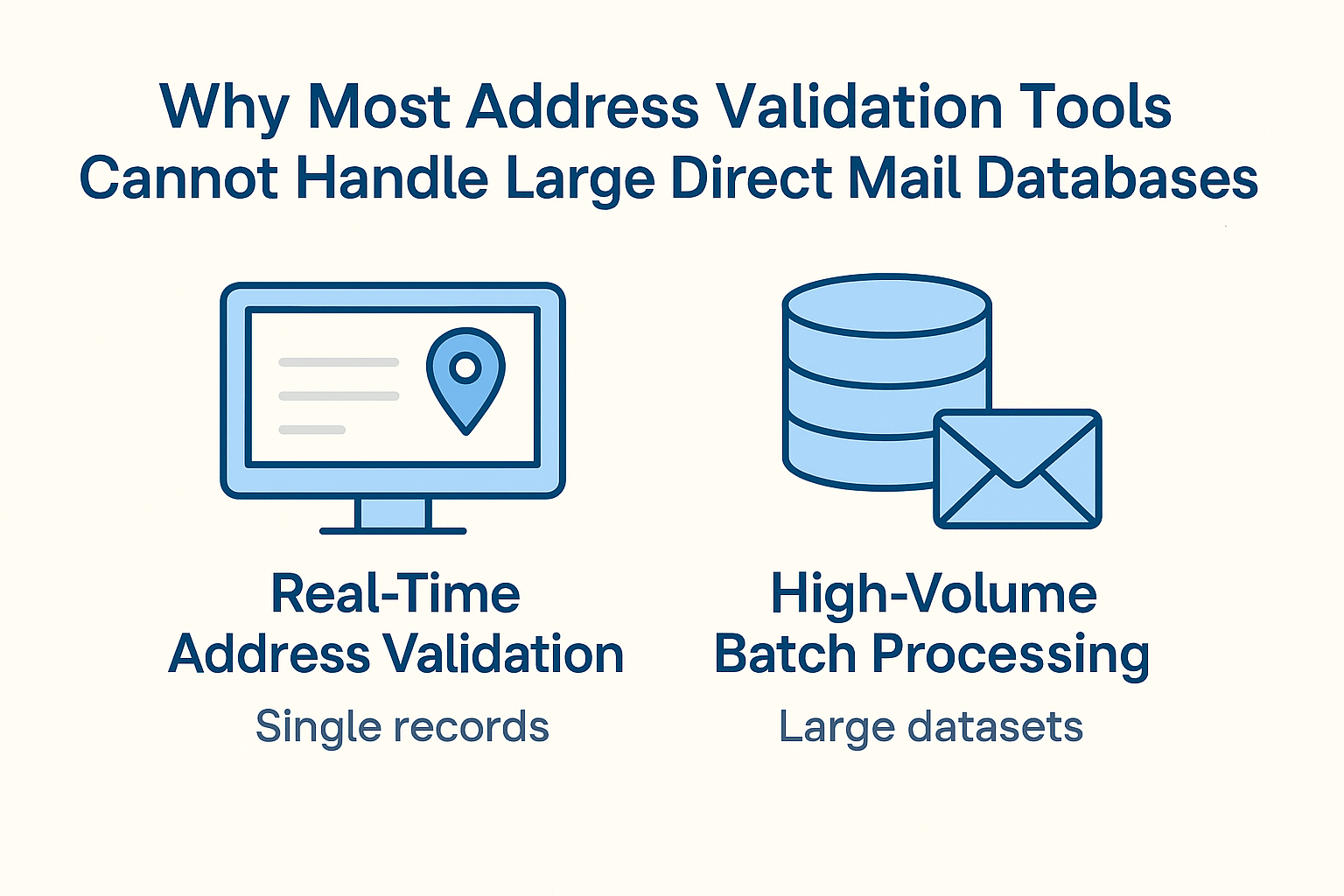
In data marketing, scale determines everything. Validating a single address on a web form is fundamentally different from processing tens or hundreds of millions of customer records for a direct mail campaign. Many organisations assume that the same address validation tools can support both scenarios. They cannot. The gap between real-time address validation and industrial-scale batch processing is significant. Misunderstanding that difference often results in long processing times, inefficient workflows and delays in direct mail production. This article explains why large-scale data processing requires specialist software and how The Software Bureau supports these high-volume environments. Real-Time Address Validation vs High-Volume Batch Processing Most modern address validation services are designed for real-time usage. A typical example is a consumer entering an [...]

Royal Mail’s Mounting Crisis: What It Means for the Future of Direct Mail

By |2026-02-25T09:22:07+00:00February 25th, 2026|

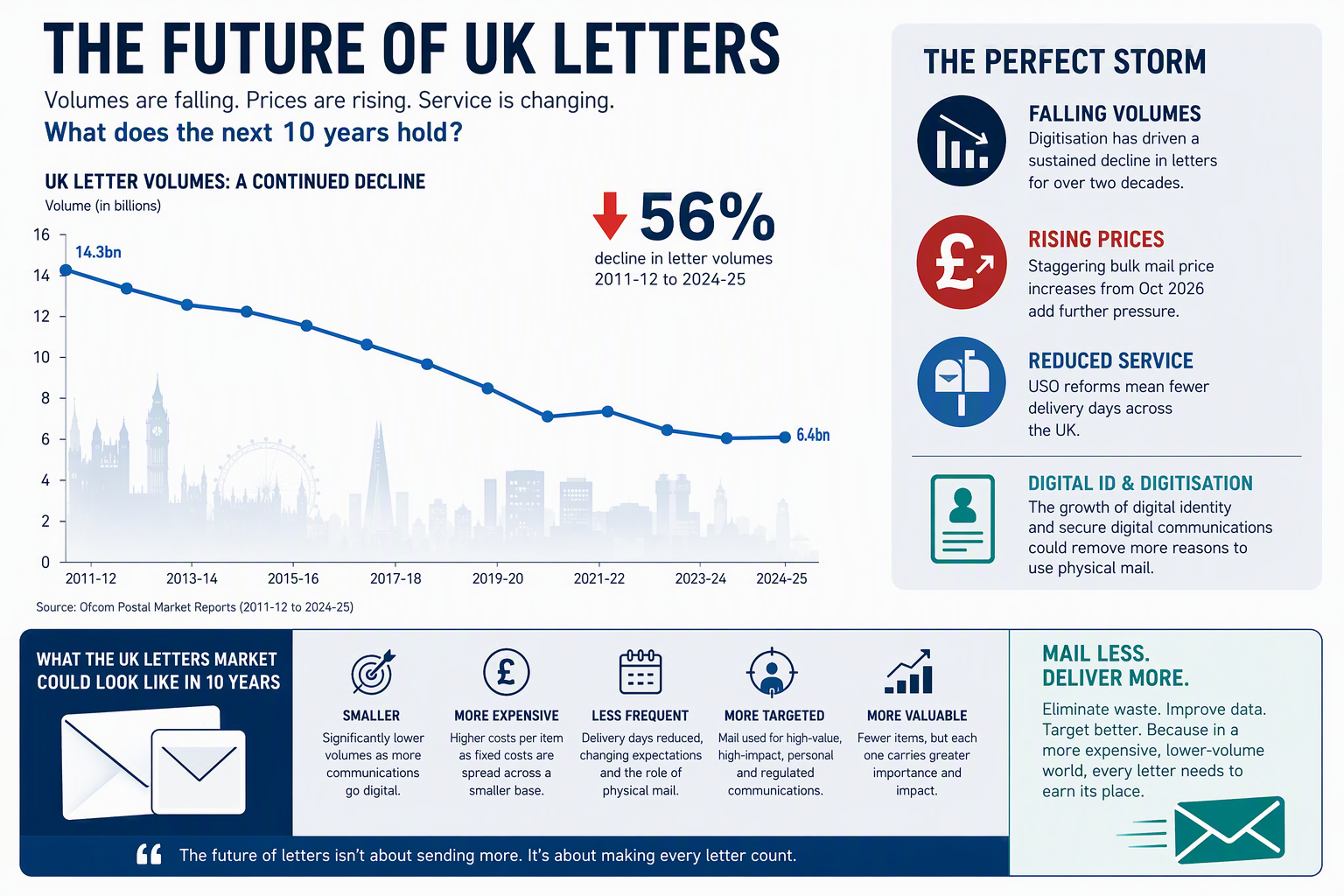
The UK’s postal landscape is facing renewed turbulence. Royal Mail, already under scrutiny for missed delivery targets, has entered what Printweek describes as “intense discussions” with the Communication Workers Union (CWU) over reforms to the Universal Service Obligation (USO). At the same time, the wider marketing industry is increasingly anxious. As Decision Marketing reports, the ongoing delivery crisis and claims that parcels are being prioritised over letters have “triggered fears of a direct mail backlash”. [printweek.com] [cwue5.org] These two developments, though reported separately, tell a single story: confidence in the mail system is under severe strain, yet direct mail remains one of the most trusted and resilient marketing channels. The question now is whether Royal Mail’s operational issues will undermine [...]

Go to Top