About Martin

Martin Rides has 35 years’ experience in the world of Data & Direct Mail. He has worked across many areas of the industry including agencies, mail production and data bureaux. After 9 years running a specialist Direct Mail consulting practice, Martin returned to The Software Bureau as Managing Director in 2015.

SwiftCore Surpasses 3 Billion Records Processed: A Landmark Achievement for Data Quality

By |2026-07-08T10:11:27+00:00July 8th, 2026|

We're proud to announce that the SwiftCore Platform has now processed more than 3 billion records since launch. This latest milestone represents far more than an impressive number. It reflects the growing demand for high-quality data, the confidence our customers place in our technology, and the proven scalability of a platform that powers some of The Software Bureau's most trusted solutions. As organisations continue to place increasing importance on data accuracy, compliance, customer insight, and operational efficiency, SwiftCore has established itself as the engine driving data quality innovation across our product portfolio and beyond. A Cloud-Native Data Quality Platform Built for Scale Hosted on the Microsoft Azure Cloud, SwiftCore delivers enterprise-grade data quality services through a powerful suite of APIs [...]

The History of Royal Mail’s Postcode Address File (PAF): A Timeline of Addressing Evolution

By |2026-06-10T09:27:23+00:00June 10th, 2026|

The Royal Mail’s Postcode Address File (PAF) is one of the most important yet often overlooked datasets in the UK. It underpins everything from mail delivery to e-commerce checkouts, credit checks, and emergency response systems. But PAF didn’t appear overnight. It evolved over decades alongside changes in addressing, technology, and society. This post explores the history and evolution of PAF, from the early days of postal districts to the digital infrastructure we rely on today. Before PAF: The Foundations of Modern Addressing (Pre-1970) 1850s–1910s: Postal districts and sorting efficiency Major cities such as London began using postal districts (e.g. “EC” or “SW”) in the mid-19th century. These were introduced to improve sorting efficiency as urban populations grew rapidly. However, outside [...]

How confident are you in the accuracy of your contact data?

By |2026-06-08T13:14:52+00:00June 8th, 2026|

Data hygiene is not just about tidy databases. It is about knowing when your contacts have moved home or sadly passed away, and ensuring your communications reflect that reality. Failing to keep this information up to date can lead to wasted budget, poor campaign performance and reputational risk. That is why we have created our FREE Complete Guide to Data Hygiene. It focuses on helping organisations identify movers and the deceased, so you can maintain accurate, respectful and effective outreach. Inside the guide, you will learn how to: - Identify customers who have moved home - Remove records linked to deceased individuals - Reduce wasted mail and improve campaign efficiency - Protect your brand by communicating responsibly - Keep your [...]

Why Regular Data Cleansing Is Essential for Modern Brands

By |2026-05-21T11:31:10+00:00May 21st, 2026|

Customer data is one of the most valuable assets any organisation owns. It powers marketing, customer experience, compliance and revenue growth. Yet without ongoing maintenance, even the strongest datasets deteriorate rapidly. People move home. People pass away. Contact details change. And when your data is out of date, the impact is immediate and costly. The Real Cost of Dirty Data Data decay is not a slow problem. It is constant and compounding. Without regular cleansing, organisations face: Wasted Budget Marketing campaigns targeting inaccurate or outdated records result in: Unnecessary print and postage costs Reduced response rates Lower overall ROI Reputational Damage Contacting individuals who have moved or, worse, deceased individuals can create deeply negative customer experiences and erode brand trust. [...]

When AI Writes Your Sprint Review (So You Don’t Have To)

By |2026-05-21T09:14:49+00:00May 21st, 2026|

If you’ve ever been a Scrum Master, you’ll know the ritual. Sprint ends. Tickets closed (hopefully). Jira updated (mostly). Charts generated (eventually). And then comes the pièce de résistance: the Sprint Review presentation. A solid hour of assembling burndown charts, checking what actually got deployed, chasing developers for just one more detail, and pulling everything into a vaguely coherent PowerPoint. It’s a labour of love. Or at least… labour. So naturally, we asked ourselves a simple question: What if we just… didn’t? The Problem We All Quietly Accept Every two weeks, like clockwork, someone takes on the responsibility of: Extracting sprint data from Jira Rebuilding burndown and burn up visualisations Summarising ticket activity Cross-checking deployment data Formatting everything into a [...]

A New Era for Data Matching in the UK: Powerful, Proven and Priced for Reality

By |2026-05-20T10:18:05+00:00May 20th, 2026|

For organisations running large CRM, ERP and customer data platforms, accurate data matching has never been more critical, or more expensive. Licence fees on long-established tools are rising, innovation has stalled, and support is drifting away from UK data teams. At The Software Bureau, we believe there is a better way. And we are building it. The Market Has Changed but Pricing Has Not Kept Pace with Value Many organisations rely on long-established data matching tools that have been embedded into their operations for years. However, as ownership structures evolve and software portfolios are consolidated into larger global organisations, customers are often faced with: Significant increases in ongoing licence costs Reduced flexibility in how solutions are deployed and used Support [...]

Why Name and Address Parsing Is the Foundation of Every Data Quality Success

By |2026-05-11T14:47:09+00:00May 11th, 2026|

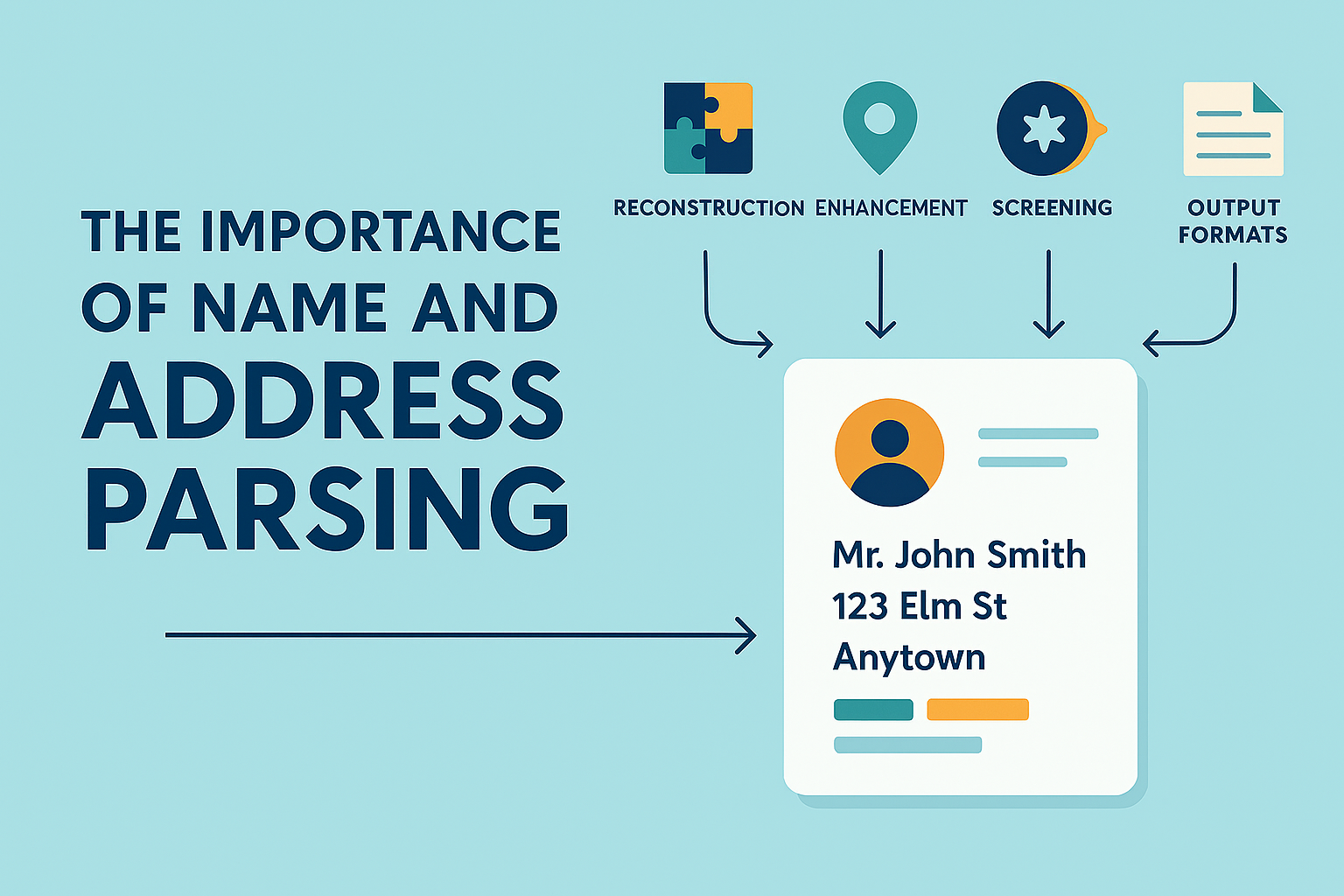
What is the single most important capability behind every effective name and address solution? Accurate parsing. Before data can be enhanced, cleansed, screened, sorted or reformatted, it must first be understood. Name and address parsing is the process that makes that understanding possible, transforming raw text into structured, reliable components that software can act on with confidence. At The Software Bureau, parsing is not a feature. It is the foundation. Parsing: the invisible engine of data quality Every contact record starts life as unstructured data. Names arrive in countless formats. Addresses vary by country, convention, abbreviation and free‑form input. Titles, suffixes, building names, sub‑premises and delivery points are often mixed together in ways that defy simple rules. Without accurate parsing, [...]

Beyond Dashboards: Where AI‑Driven Database Query Tools Can Transform Cloud Services

By |2026-04-27T14:43:26+00:00May 1st, 2026|

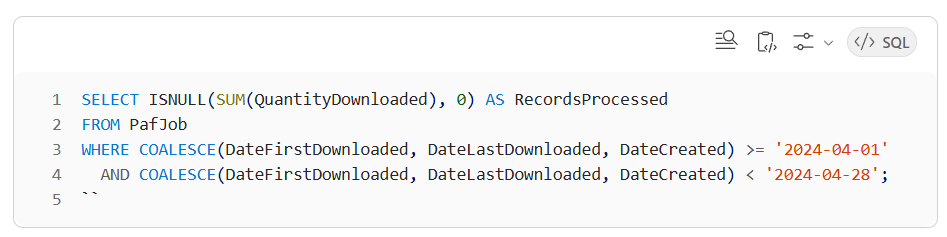
Most cloud platforms are swimming in data. Volumes, frequencies, throughput, processing types, error rates, latency curves. All the raw ingredients are there. Yet in many organisations, the ability to ask questions of that data remains locked behind SQL skills, rigid dashboards, or overstretched technical teams. This is the gap ChatDB was designed to close. ChatDB is an internal AI‑powered interface that allows non‑coders to query the SwiftCore Report Engine using natural language. Instead of writing SQL or navigating pre‑defined analytics views, users simply ask questions in plain English and receive both a clear answer and the exact query used to produce it. For example: How many records did PAF process between 1st April and 27th April? ChatDB interpreted the intent, [...]

Eliminating Mojibake: How Our New SwiftCore Translation Fix Improves Data Integrity

By |2026-04-22T10:13:43+00:00April 22nd, 2026|

Text corruption has long been one of the most frustrating obstacles in data processing. Anyone who has worked with large, diverse data sources will have encountered the odd tangle of characters that appear in place of clean text. This problem, known as Mojibake, arises when character encoding is misinterpreted. It looks like a small nuisance on the surface, but in practice it can disrupt analytics, weaken matching, and undermine entire workflows. To address this, we have introduced a translation fix within our SwiftCore processing engine. It is designed to prevent Mojibake at source, repair corrupt text when encountered, and improve the overall integrity of every dataset that passes through the platform. What causes Mojibake in the first place? Mojibake is [...]

Why Human Support Still Matters in a Software World Obsessed with Automation

By |2026-04-15T15:07:04+00:00April 15th, 2026|

Software is built by people, used by people and relied on by people. Yet across the industry we are seeing a troubling trend. Customer support is being steadily dehumanised in the name of efficiency. AI chatbots block access to real people. Ticket systems loop customers through generic responses. Support is offshored to teams far removed from the product and the customer’s reality. The outcome is familiar: frustration, delay and a sense that nobody truly owns the problem. In the race to automate, many software companies are forgetting one essential word. Empathy. The False Economy of Removing the Human Element AI has its place within customer support. It can help with basic queries, documentation and triage. The problem arises when automation [...]

Go to Top