How confident are you in the accuracy of your contact data?

By |2026-06-08T13:14:52+00:00June 8th, 2026|

Data hygiene is not just about tidy databases. It is about knowing when your contacts have moved home or sadly passed away, and ensuring your communications reflect that reality. Failing to keep this information up to date can lead to wasted budget, poor campaign performance and reputational risk. That is why we have created our FREE Complete Guide to Data Hygiene. It focuses on helping organisations identify movers and the deceased, so you can maintain accurate, respectful and effective outreach. Inside the guide, you will learn how to: - Identify customers who have moved home - Remove records linked to deceased individuals - Reduce wasted mail and improve campaign efficiency - Protect your brand by communicating responsibly - Keep your [...]

A New Era for Data Matching in the UK: Powerful, Proven and Priced for Reality

By |2026-05-20T10:18:05+00:00May 20th, 2026|

For organisations running large CRM, ERP and customer data platforms, accurate data matching has never been more critical, or more expensive. Licence fees on long-established tools are rising, innovation has stalled, and support is drifting away from UK data teams. At The Software Bureau, we believe there is a better way. And we are building it. The Market Has Changed but Pricing Has Not Kept Pace with Value Many organisations rely on long-established data matching tools that have been embedded into their operations for years. However, as ownership structures evolve and software portfolios are consolidated into larger global organisations, customers are often faced with: Significant increases in ongoing licence costs Reduced flexibility in how solutions are deployed and used Support [...]

Why Name and Address Parsing Is the Foundation of Every Data Quality Success

By |2026-05-11T14:47:09+00:00May 11th, 2026|

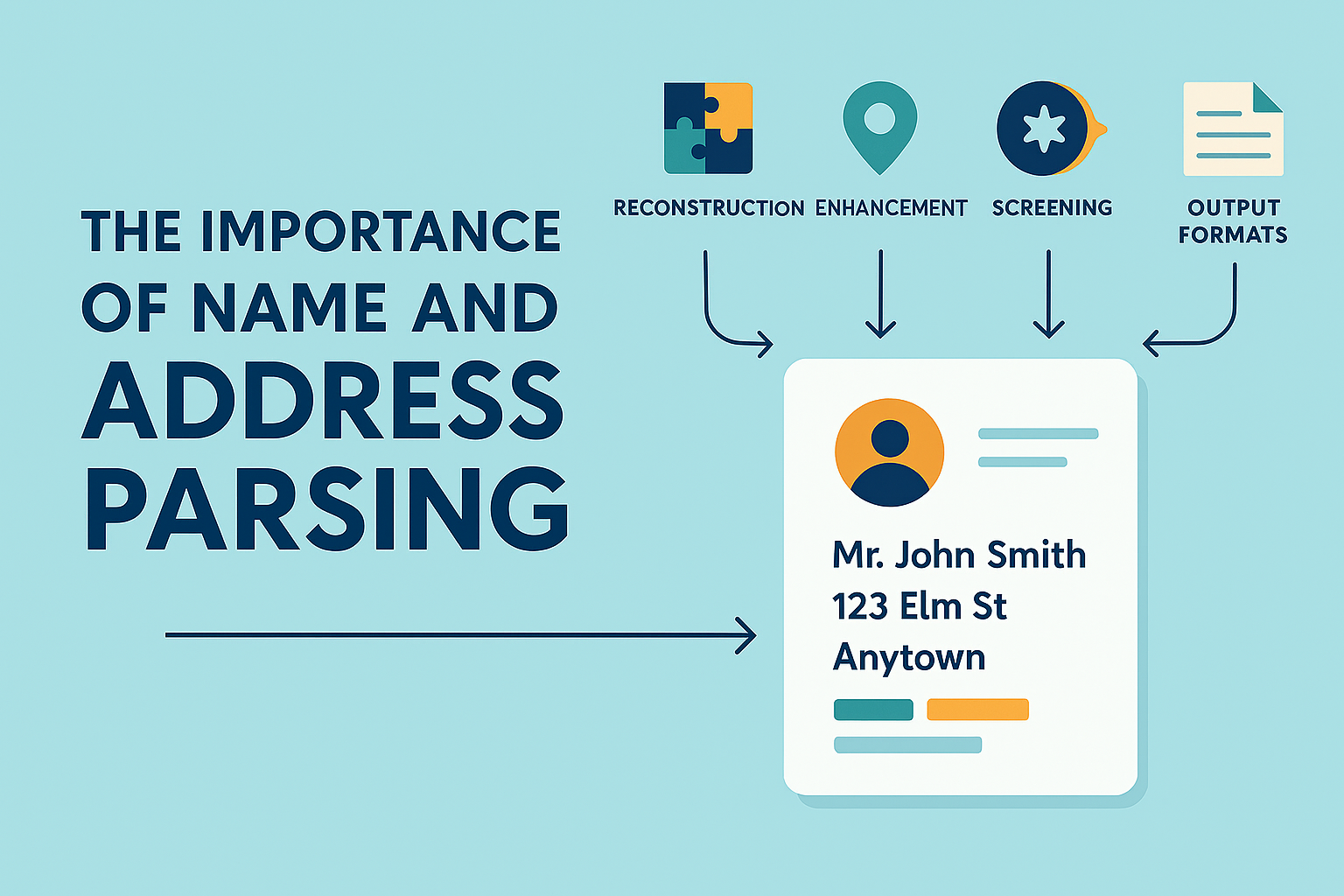
What is the single most important capability behind every effective name and address solution? Accurate parsing. Before data can be enhanced, cleansed, screened, sorted or reformatted, it must first be understood. Name and address parsing is the process that makes that understanding possible, transforming raw text into structured, reliable components that software can act on with confidence. At The Software Bureau, parsing is not a feature. It is the foundation. Parsing: the invisible engine of data quality Every contact record starts life as unstructured data. Names arrive in countless formats. Addresses vary by country, convention, abbreviation and free‑form input. Titles, suffixes, building names, sub‑premises and delivery points are often mixed together in ways that defy simple rules. Without accurate parsing, [...]

Eliminating Mojibake: How Our New SwiftCore Translation Fix Improves Data Integrity

By |2026-04-22T10:13:43+00:00April 22nd, 2026|

Text corruption has long been one of the most frustrating obstacles in data processing. Anyone who has worked with large, diverse data sources will have encountered the odd tangle of characters that appear in place of clean text. This problem, known as Mojibake, arises when character encoding is misinterpreted. It looks like a small nuisance on the surface, but in practice it can disrupt analytics, weaken matching, and undermine entire workflows. To address this, we have introduced a translation fix within our SwiftCore processing engine. It is designed to prevent Mojibake at source, repair corrupt text when encountered, and improve the overall integrity of every dataset that passes through the platform. What causes Mojibake in the first place? Mojibake is [...]

Why Returned Mail Can No Longer Be Ignored: An Industry Wide Call to Action

By |2026-04-13T08:55:14+00:00April 13th, 2026|

Returned Mail has long been an inconvenient truth in the UK postal ecosystem. Despite its scale, cost and operational drag, it remains largely unmeasured and therefore unmanaged. My recent LinkedIn post highlighted a simple but troubling reality: Royal Mail continues to double handle significant volumes of Return to Sender mail without recording volume, root cause or resulting waste. This is not solely a Royal Mail issue. It represents a wider industry failure to create effective feedback loops that improve address quality, reduce waste and lower costs for everyone involved. It is time to move this conversation beyond anecdote and towards collective action. The Silent Cost of Returned Mail RTS mail remains one of the least transparent operational processes within Royal [...]

Elevate Your Data Hygiene Expertise with Free One to One Training

By |2026-03-16T16:59:49+00:00March 16th, 2026|

Data hygiene has never been more important. Whether you are an intermediary delivering data services for clients or a brand owner managing large volumes of customer information, maintaining clean, accurate and compliant data is fundamental to performance and trust. To support everyone involved in promoting best practice, we are offering free one to one data hygiene training. This is available to all, whether you are already a client or entirely new to us. Why Data Hygiene Matters For intermediaries such as data bureaux and mail producers, data hygiene services are a proven driver of incremental revenue. They improve the quality of the datasets you process, reduce wasted output, increase client satisfaction and often open up entirely new service lines. Brand [...]

Data Cleansing Cadence: Why “Set and Forget” Is Costing You More Than You Think

By |2026-01-21T13:45:32+00:00January 21st, 2026|

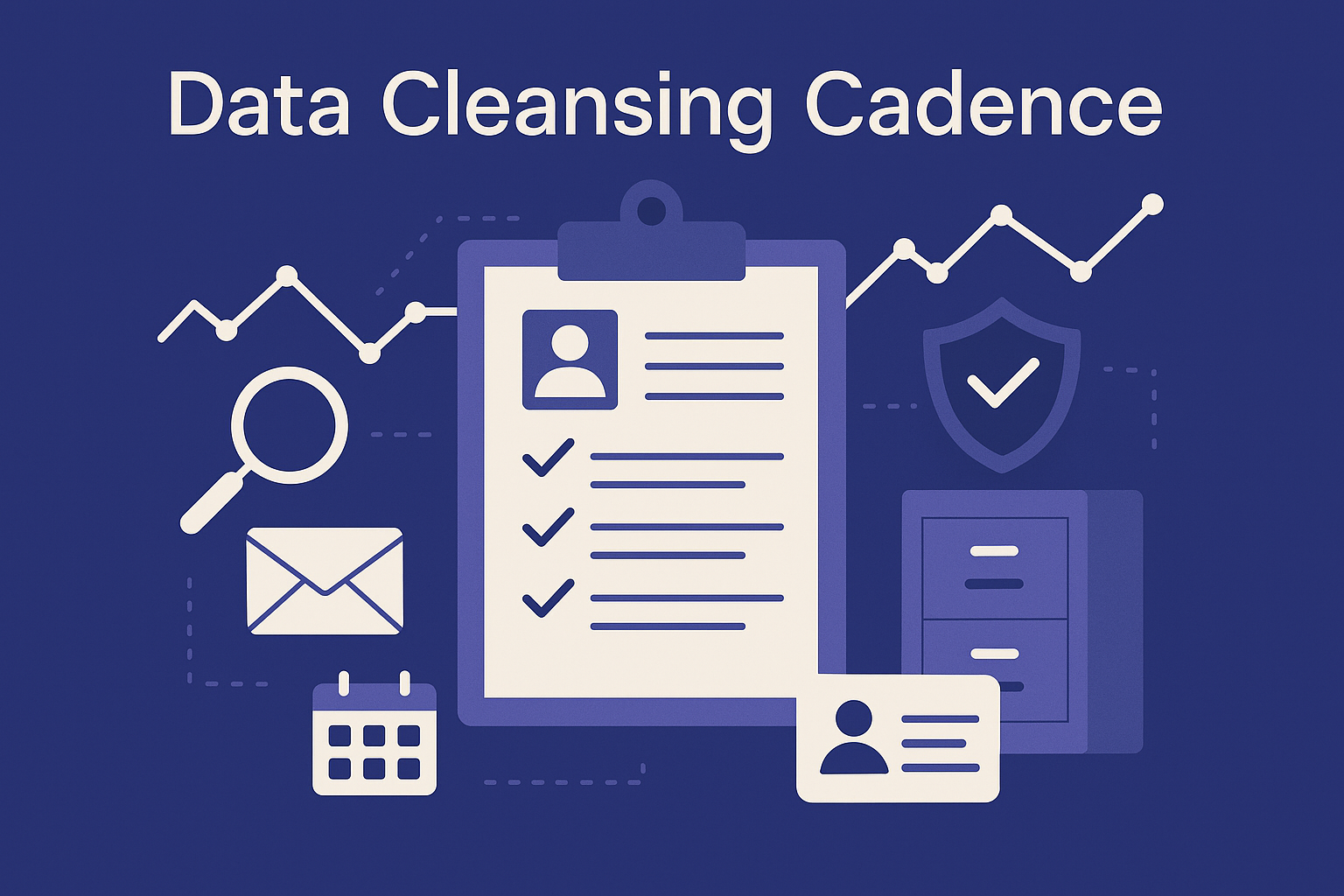
I joined a great webinar today hosted by Paragon and the DMA, where one of the topics covered by Hannah Stapleford really stood out to me: Data Hygiene Cadence. I have to admit, I initially had to look up the word cadence. In simple terms, it means a regular and repeated pattern of activity. Once I had done that, it struck me just how perfectly the term describes where brands need to be when it comes to managing data quality within their customer data environments. Hannah was absolutely spot on, and she shared a couple of statistics that make this topic impossible to ignore: Around 10 percent of the UK population moves home each year Around 1 percent of the [...]

Why Processing Customer Data Against Change of Address Files is Crucial for Business Success

By |2026-01-14T12:45:08+00:00January 14th, 2026|

Every year, UK businesses waste £1 billion on mistargeted mailings: sending communications to people who have moved or even passed away. Beyond the financial cost, this erodes brand reputation and risks GDPR non-compliance. With 3.5 million households moving annually and 548,000 deaths each year, customer data decays at an alarming rate. This is why processing your data against Change of Address (COA) datasets is not just best practice; it is essential. What Are COA Data Sets? Change of Address files, such as Royal Mail’s National Change of Address (NCOA) and Experian’s Absolute Contacts, identify when a person has moved and provide their new address. These datasets allow businesses to: Suppress goneaways (people who have moved and not informed you). Update [...]

Understanding the Mailing Preference Service: What It Is (and When You Need It)

By |2025-11-12T13:47:06+00:00November 12th, 2025|

The Mailing Preference Service (MPS) is one of the most important suppression files in UK direct mail. Managed by the Data & Marketing Association (DMA), MPS allows consumers to opt out of receiving unsolicited mail, that is, marketing they did not ask for and from companies they have no existing relationship with. In short, if you are sending cold mailings, the MPS is your best friend. It protects consumers’ preferences and keeps you compliant with best practice and data protection principles. When You Need to Use MPS Any business using third-party or prospect data for direct mail campaigns must screen against the MPS before mailing. This ensures that anyone who has opted out of receiving unsolicited marketing is removed from [...]

The Alpha-Numeric Backbone: A Data Manager’s Take on the UK Postcode History

By |2025-10-22T07:17:08+00:00October 22nd, 2025|

As a Data Manager, few things are as satisfying as a well-structured, consistent, and universally adopted dataset. In the UK, the postcode system is a prime example of this data harmony. It is more than just a sequence of letters and numbers; it is a critical piece of infrastructure, a tool for logistics, planning, and analysis. But how did this essential system evolve into the sophisticated data structure we use today? The Early Days: Before the Code Before the systematised codes, postal workers relied on geographical knowledge and local sorting districts. The first step toward standardisation came in the mid-19th century. 1857: London was divided into 10 postal districts (E.C., W.C., N., S.W., etc.), which were essentially the predecessors to [...]

Go to Top